
Target, Acceptable, Process Indicator, Defect: How IPC-A-610 Judges an Assembly
Oct 13, 2026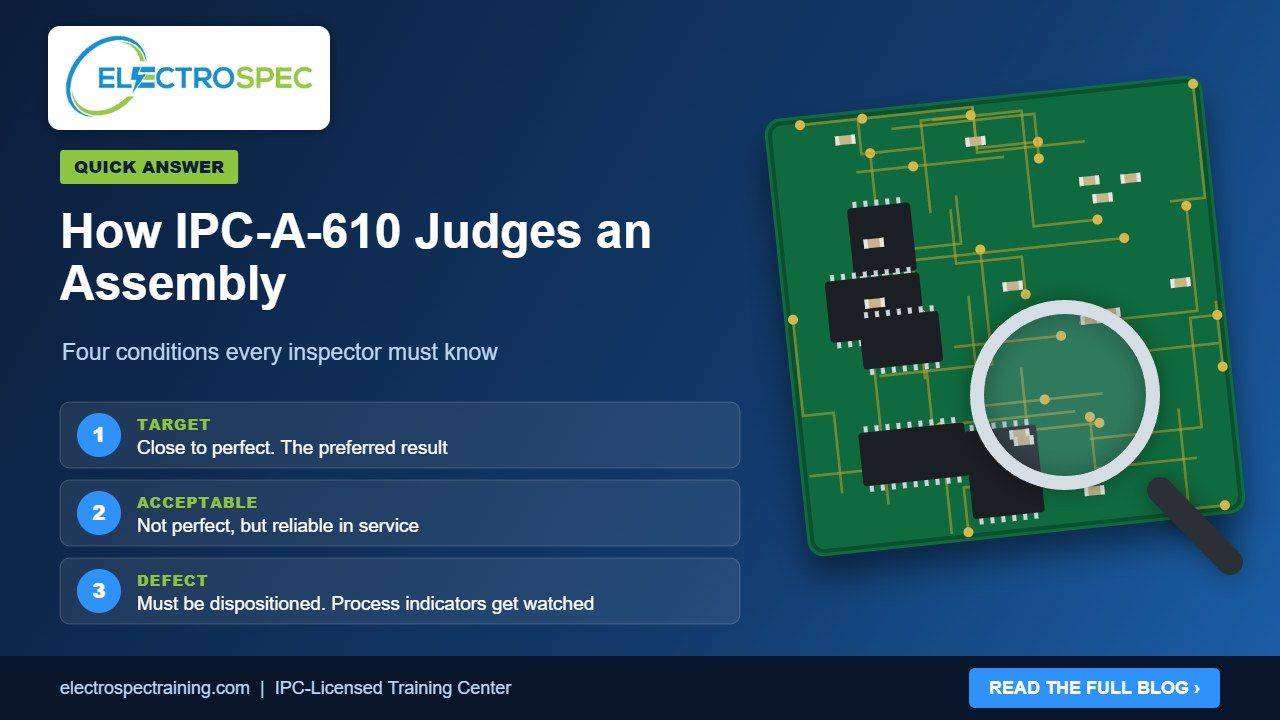
IPC-A-610 does not just say "good" or "bad."
It uses four conditions to describe what an inspector sees. Knowing them is the foundation of every IPC-A-610 exam and every inspection decision.
1. Target Condition
The target condition is close to perfect. It is the preferred result.
It is not required. A product does not have to meet the target condition to be accepted.
2. Acceptable Condition
An acceptable condition is not necessarily perfect, but it maintains the integrity and reliability of the assembly in its service environment.
Acceptable product ships. Inspectors should not reject product just because it is not at the target.
3. Process Indicator
A process indicator is not a defect. The product is still acceptable.
It signals that the process is drifting. The condition should be tracked so the process can be improved before it produces defects.
Process indicators are a tool for engineers, not a reason to reject product.
4. Defect Condition
A defect may not ensure the form, fit or function of the product in its end-use environment.
Defects must be dispositioned. The usual options are rework, repair, scrap or use as is. Repair and use-as-is decisions often require customer approval.
The Class Changes the Answer
The same condition can be acceptable for Class 1 and a defect for Class 3.
Always confirm the product class before you inspect.
Why This Matters on the Exam
Many IPC-A-610 exam questions ask you to identify the condition for a specific class.
Students who understand the four conditions, and who can find the right table or figure in the standard quickly, do much better.