The Blog.
IPC CID Certification: The Missing Link Between PCB Design, Fabrication & Assembly
PCB design does not end when the layout is complete.
A board may look good on the screen, pass basic design rule ch...
IPC-A-610 vs. IPC J-STD-001: Why A-610 Training Matters More for Operators and Inspectors
The real gap analysis between product acceptance and process control
In electronics manufacturing, IPC-A-610...
Robots Still Need Humans: Why IPC Training Matters in the Age of Automation
Walk through any major technology event today and the message is clear: automation is here.
Robots are moving across the s...
Stop Treating IPC-7711/7721 Like Acceptance Criteria
The Better Training Model for Electronics Rework & Repair
Rework and repair are some of the most misunderstood areas in electronics manufacturing...
Why IPC-A-610 Is the Right Certification for Rework and Repair Operators, Not IPC-7711/7721
Rework and repair are some of the most misunderstood areas in electronics manufacturing training.
Many com...
J-STD-001 Process Requirements Are Engineering Responsibilities, Not Operator Certification Requirements
One reason J-STD-001 gets overused in cable and wire harness training is because it contains p...
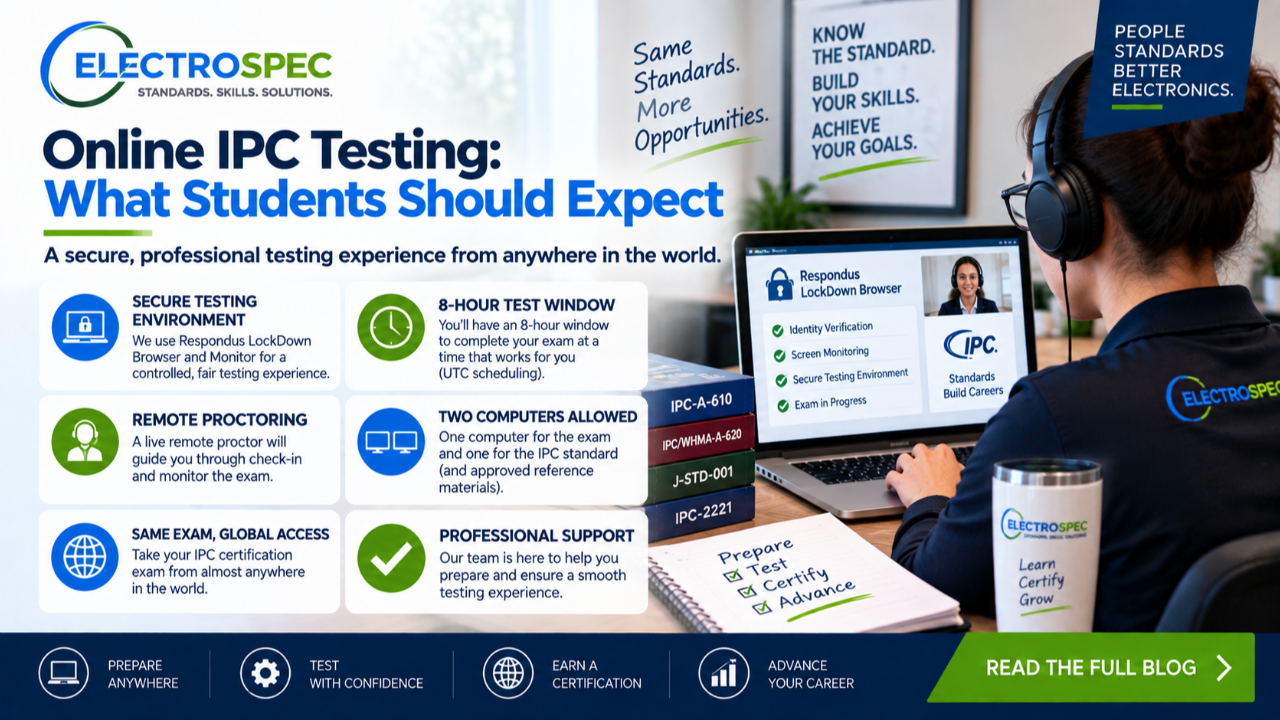
Remote IPC Testing: Why the LockDown Browser Practice Exam Matters
One of the biggest advantages of IPC certification today is that many exams can be completed remotely.
That means students do not a...
Why IPC-A-610 Is the Standard Everyone in Electronics Manufacturing Should Understand
In electronics manufacturing, every role looks at product from a slightly different perspective.
Inspectors veri...
Why IPC-A-610 Should Be Primary Certification for Inspectors, Operators, and Production Teams
Companies often ask which IPC certification matters most for production personnel.
Should operators and ...
iNARTE ESD Certification, Condensed, Practical, & Built for Real ESD Program Responsibility
Electrostatic discharge control is not one-size-fits-all training.
An operator needs enough ESD awareness ...
One of the most common questions we receive at ElectroSpec is:
“What does IPC certification testing actually involve?”
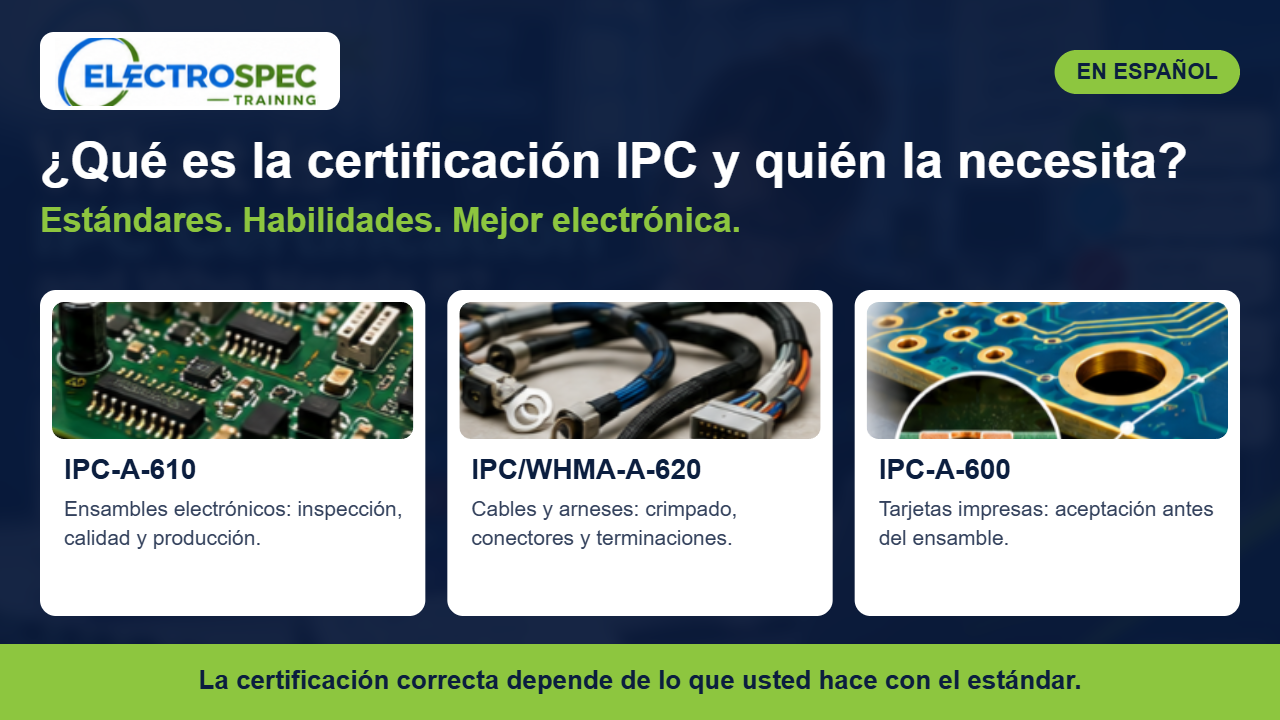
Whether you are preparing for IPC-A-610, IPC/WHMA-A-620, IPC-A-600, or CID certif...
If you’re a PCB designer looking at IPC certification, you’ve probably noticed two options that sound similar: CID and CID+. Same organization, same design focus, very different levels of depth. This ...
Electronic assemblies often pass inspection, meet IPC criteria, and still fail in the field.
Why?
Because standards define acceptability — not system alignment.
In this video, we break down how des...
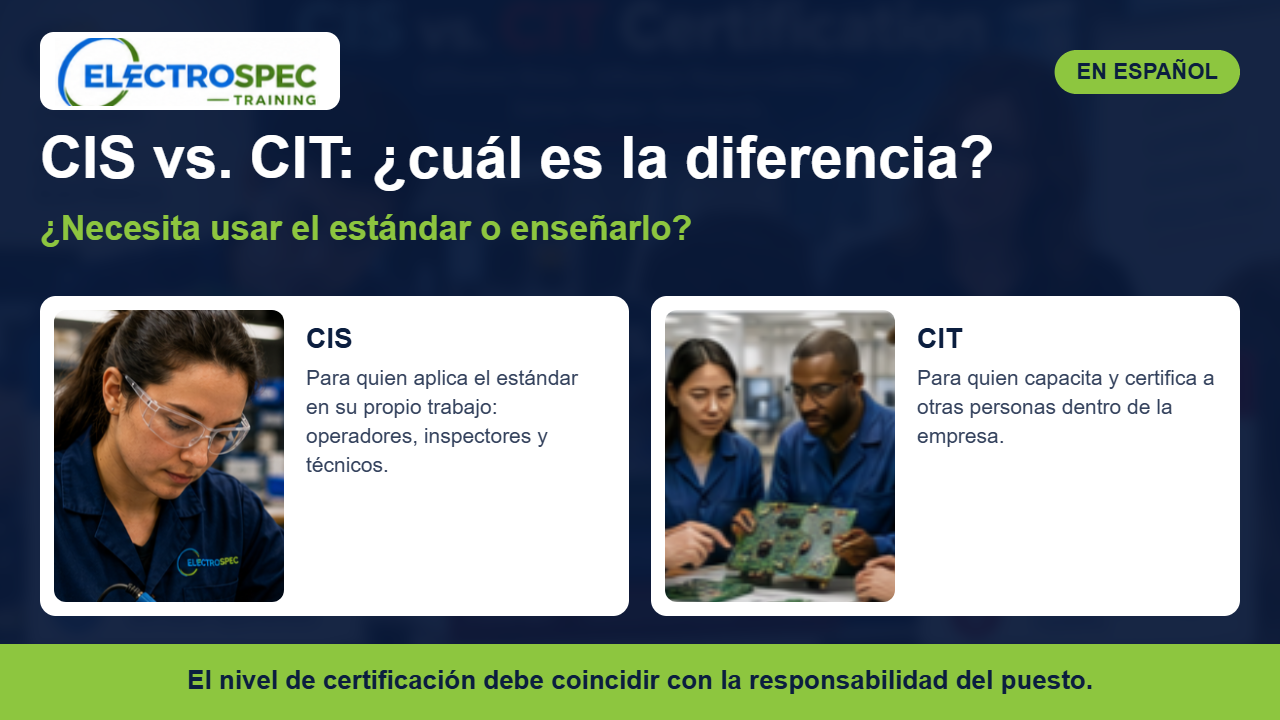
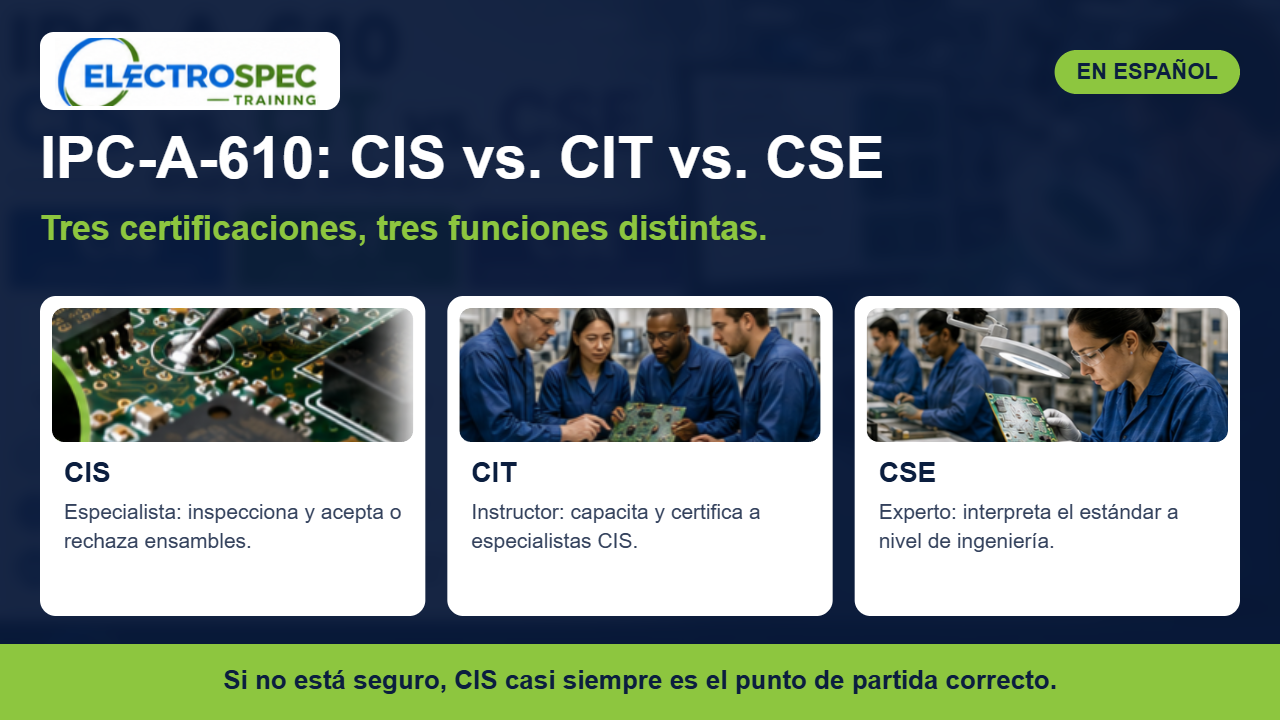
CIT stands for Certified IPC Trainer. It is the certification that qualifies you to train and administer the CIS exam to individuals. If you are the person at your company who runs the inspection cert...
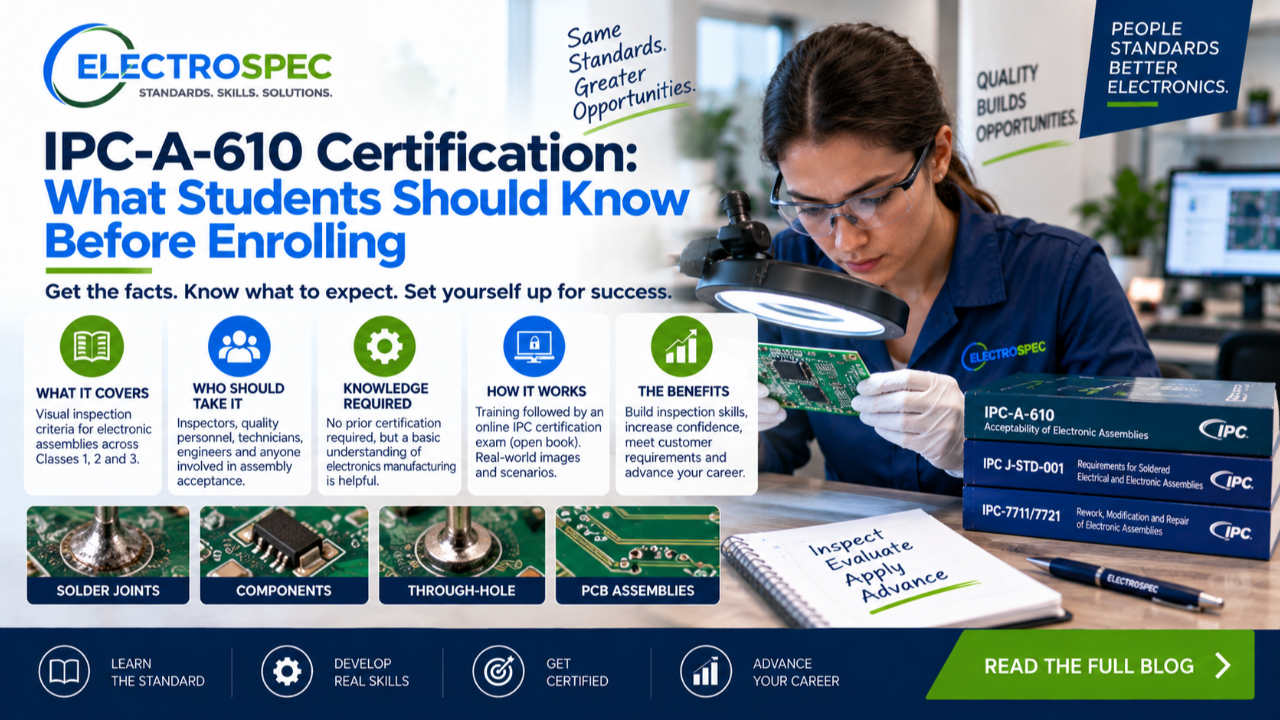
When you look into IPC-A-610 certification, you quickly run into three acronyms: CIS, CIT, and CSE. They all relate to the IPC-A-610 standard, but they are not the same certification. They certify dif...